Optimize Commuter Benefits 2026: Save $315 Monthly
Anúncios

Commuter Benefits 2026 Optimization is gaining attention as employers and employees adapt to updated IRS transportation benefit limits and rising commuting costs. The most significant change for 2026 is the increase in the monthly tax-free limit for qualified transit, vanpool, and parking benefits from $325 to $340 per month, allowing participants to set aside more pre-tax income for eligible commuting expenses.
The update matters because commuter benefits remain one of the few tax-advantaged programs that can reduce taxable income while helping employees manage transportation expenses. Industry estimates indicate that employees can save hundreds of dollars annually through pre-tax transit and parking contributions, while employers may reduce payroll tax liabilities when participation increases.
Looking ahead, employers should review 2026 enrollment strategies, update payroll systems to reflect the new limits, and monitor local commuter-benefit mandates that may apply in certain cities and states. Employees should evaluate whether increasing their pre-tax contributions could provide additional tax savings, particularly as transportation and parking costs continue to rise.
Understanding the 2026 Commuter Benefit Landscape
The year 2026 brings forward a refined framework for commuter benefits, aiming to provide greater financial relief for employees navigating daily transportation. These adjustments are designed to reflect current economic realities and encourage more sustainable commuting practices across the United States.
Initial reports suggest an increased emphasis on accessibility and flexibility within benefit programs, allowing a broader range of options for commuters. This shift acknowledges the diverse commuting habits prevalent in today’s workforce, from public transit users to those opting for carpooling or vanpooling.
Anúncios
For many, the prospect of saving up to $315 monthly on transportation costs represents a significant boost to personal finances. This potential saving highlights the importance of thorough understanding and strategic utilization of the available benefits.
Key Regulatory Updates for 2026
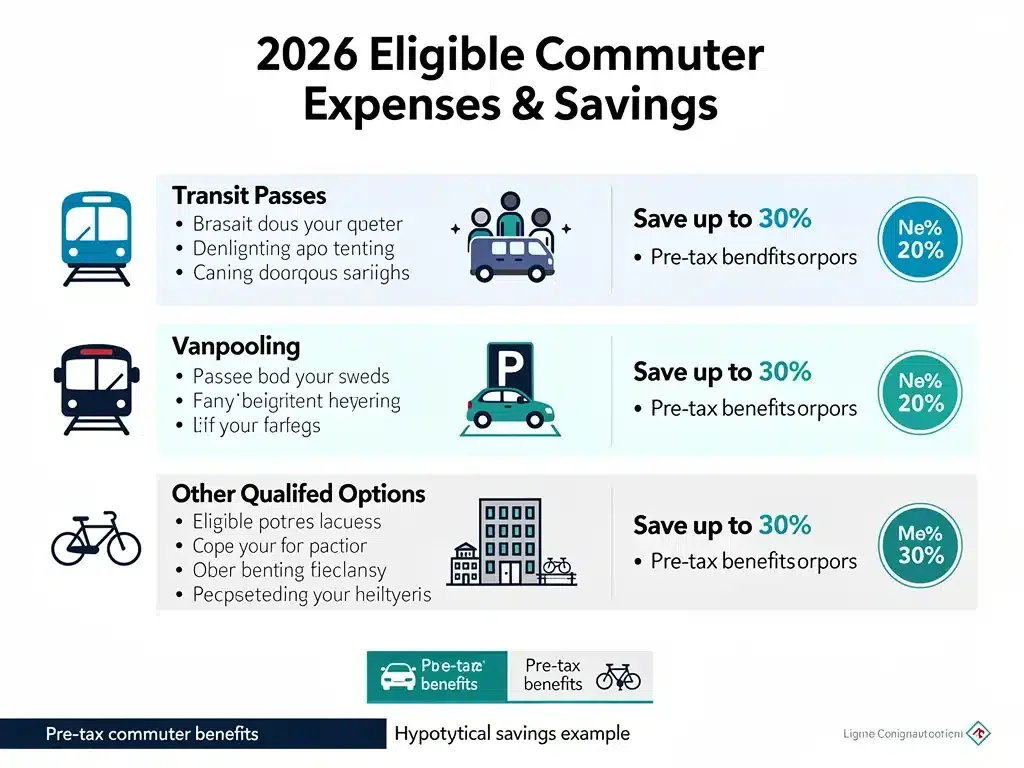
New regulations effective in 2026 will introduce several changes to the existing commuter benefit structure, primarily focusing on pre-tax deductions for qualified transportation expenses. These updates are intended to streamline the process for both employers and employees, making the benefits more attractive and easier to manage.
Employers should review their current benefit offerings to ensure compliance and maximize the advantages for their workforce. Failure to adapt could result in missed opportunities for tax savings and employee satisfaction, which are crucial in a competitive job market.
- Increased monthly pre-tax limits for transit and parking expenses.
- Clarification on eligible vanpooling and ride-sharing services.
- Enhanced digital platforms for managing commuter benefit accounts.
- New guidelines for reporting and compliance to the IRS.
Impact on Monthly Transportation Costs
The direct impact of these updated benefits will be felt most acutely in the reduction of out-of-pocket transportation expenses. By leveraging pre-tax dollars, commuters can effectively lower their taxable income, leading to greater disposable income each month.
This financial relief is particularly valuable given the fluctuating costs of fuel, public transit fares, and parking in major metropolitan areas. Proactive engagement with these benefits can transform a significant monthly expenditure into a manageable and more affordable necessity.
The potential for saving up to $315 monthly is not merely a hypothetical figure but a tangible goal achievable through informed decision-making. This level of savings can free up funds for other essential expenses or personal investments, improving overall financial well-being.
Maximizing Your Commuter Benefits: A Strategic Approach
To fully capitalize on the potential savings offered by Commuter Benefits 2026 Optimization, a strategic approach is essential. This involves understanding your commuting patterns, identifying eligible expenses, and actively engaging with your employer’s benefits program.
Anúncios
Many employees overlook the full scope of benefits available to them, often leaving significant savings on the table. A comprehensive review of your daily commute and associated costs is the first step toward unlocking these financial advantages.
The aim is not just to participate in the program, but to optimize your participation to achieve the maximum possible monthly savings. This requires a proactive stance and a willingness to explore all facets of the benefit structure.
Identifying Eligible Expenses
The IRS defines specific categories of expenses that qualify for commuter benefits, including mass transit passes, vanpooling costs, and qualified parking expenses. Understanding these categories is fundamental to ensuring your deductions are compliant and maximized.
It is important to differentiate between eligible and ineligible expenses to avoid any complications. For instance, while public bus and train fares are typically covered, personal car maintenance or gasoline costs for single-occupancy vehicles are generally not.
Regularly checking official IRS guidelines and your employer’s specific plan details will help you stay informed about any nuanced changes or additions to eligible expenses.
- Public transit fares (bus, subway, light rail, ferry).
- Vanpooling costs (vehicles seating at least 6 adults, where at least half the seating capacity is used for commuting).
- Qualified parking expenses (parking near your workplace or near a public transit stop).
- Bicycle commuting reimbursement (though often separate from traditional transit/parking benefits).
Leveraging Pre-Tax Deductions Effectively
The primary mechanism for saving with commuter benefits is through pre-tax deductions. This means that money allocated to your commuter benefit account is subtracted from your gross income before taxes are calculated, reducing your taxable earnings.
The immediate advantage is a lower tax burden, which translates directly into more take-home pay. The power of pre-tax savings should not be underestimated, as it can compound over the year to significant amounts.
Employees should carefully calculate their anticipated monthly commuting costs and set their pre-tax deductions accordingly to avoid over or under-contributing. Most programs allow adjustments at various points throughout the year.
Employer Responsibilities and Program Implementation
Employers play a pivotal role in the successful implementation and promotion of Commuter Benefits 2026 Optimization. Their commitment to offering and clearly communicating these benefits is crucial for widespread employee participation and satisfaction.
Providing accessible information and robust administrative support ensures that employees can easily enroll and manage their benefits. A well-structured program benefits both the workforce and the organization through enhanced morale and potential tax advantages for the company.
It is incumbent upon employers to stay abreast of regulatory changes and adapt their benefit offerings to remain competitive and compliant. This proactive approach fosters a positive work environment and supports employee well-being.
Compliance with IRS Guidelines
Adhering to IRS guidelines is non-negotiable for employers offering commuter benefits. These guidelines dictate everything from eligible expenses to contribution limits and reporting requirements, ensuring the program’s tax-advantaged status.
Regular audits and internal reviews are recommended to verify ongoing compliance and prevent any potential penalties. Staying informed about the latest IRS publications and seeking expert advice when needed can mitigate risks.
- Ensuring correct pre-tax deduction limits are applied.
- Maintaining accurate records of employee contributions and reimbursements.
- Providing clear documentation to employees regarding program rules.
- Submitting necessary reports to the IRS in a timely manner.
Communicating Benefits to Employees
Effective communication is key to driving employee engagement with commuter benefits. Many employees may be unaware of the full scope of their eligibility or the potential savings involved, leading to underutilization of the program.
Employers should utilize multiple channels to disseminate information, including internal memos, dedicated benefit portals, and informational sessions. Clear, concise, and persuasive messaging can highlight the financial advantages and ease of participation.
Highlighting success stories or providing personalized savings calculators can further motivate employees to enroll and actively manage their commuter benefits. The goal is to make the process as transparent and straightforward as possible.
The Role of Technology in Commuter Benefit Management
Advancements in technology are profoundly simplifying the administration and utilization of commuter benefits, making Commuter Benefits 2026 Optimization more accessible than ever. Digital platforms and mobile applications are transforming how employees manage their transportation expenses.
These technological tools offer convenience, real-time tracking, and often direct integration with public transit systems, reducing the administrative burden. The shift towards digital solutions aligns with modern workforce expectations for seamless self-service options.
Both employers and employees benefit from increased efficiency and transparency, ensuring that funds are allocated correctly and savings are realized without unnecessary hassle. Embracing these innovations is crucial for a successful commuter benefit program.
Digital Platforms for Enrollment and Tracking
Most modern commuter benefit programs are administered through user-friendly digital platforms. These portals allow employees to enroll, select their desired contribution amounts, and track their usage and remaining balances with ease.
The ability to access this information at any time, from anywhere, empowers employees to make informed decisions about their commuting expenses. These platforms often provide detailed transaction histories and statements, simplifying personal financial tracking.
Employers also benefit from these systems, as they automate many administrative tasks, reduce paperwork, and provide comprehensive reporting capabilities for compliance and internal analysis.
Integration with Public Transit Systems
A growing trend in commuter benefits is the direct integration of benefit accounts with public transit passes and payment systems. This allows employees to load pre-tax funds directly onto their transit cards or mobile apps.
This seamless integration eliminates the need for manual reimbursement processes, making commuting more convenient and efficient. It also encourages greater adoption of public transportation, aligning with broader sustainability goals.
- Direct loading of funds onto transit smart cards.
- Mobile payment options linked to commuter benefit accounts.
- Real-time balance checks and transaction alerts.
- Automated monthly contributions for recurring transit passes.
Future Trends and Long-Term Savings Potential
Looking beyond 2026, the landscape of commuter benefits is expected to continue evolving, with a growing emphasis on sustainability, multimodal transportation, and personalized benefit packages. This forward-looking perspective is vital for long-term Commuter Benefits 2026 Optimization.
Anticipated trends suggest greater flexibility and a more holistic approach to employee benefits, where commuting plays a significant role. Employers who proactively adapt to these changes will be better positioned to attract and retain talent.
The long-term savings potential for employees is substantial, extending beyond just monthly transportation costs to include broader financial health and environmental benefits. Strategic planning now can yield dividends for years to come.
Sustainability and Multimodal Commuting
There is an increasing focus on promoting sustainable commuting options, such as cycling, walking, and electric vehicle charging, within benefit programs. While traditional transit and parking remain core, the expansion to eco-friendly alternatives is a notable trend.
Multimodal commuting, which combines several transport methods, is also gaining traction, and future benefit structures may better accommodate these integrated approaches. This reflects a broader societal shift towards greener practices and reduced carbon footprints.
Employers can play a crucial role by incentivizing these sustainable options, not only for their environmental impact but also for the health and well-being of their employees. This can include partnerships with bike-share programs or subsidies for electric vehicle charging.
Personalized Benefit Packages
The future of employee benefits, including commuter benefits, points towards greater personalization. Instead of one-size-fits-all solutions, employees may have more options to tailor their benefit packages to their individual needs and commuting styles.
This could involve a flexible spending account specifically for transportation, allowing employees to allocate funds across various eligible expenses as their needs change. Such flexibility enhances the perceived value of the benefits.
- Customizable commuter benefit allocations.
- Integration with broader wellness programs for incentives.
- Flexible options for remote and hybrid workers.
- Dynamic adjustments based on changing commuting patterns.
| Key Aspect | Description |
|---|---|
| Max Monthly Savings | Up to $315 achievable through pre-tax deductions. |
| Eligible Expenses | Transit, vanpooling, and qualified parking costs. |
| Employer Role | Program implementation, compliance, and communication. |
| Tech Integration | Digital platforms simplify management and access. |
Frequently Asked Questions About Commuter Benefits 2026 Optimization
What are the main changes to commuter benefits in 2026?▼In 2026, commuter benefits will see updated pre-tax limits for transit and parking, along with clearer guidelines for eligible vanpooling and ride-sharing services. There’s also an emphasis on enhanced digital platforms to streamline management for both employees and employers, ensuring greater accessibility and ease of use.
How can I save up to $315 monthly on transportation costs?▼You can achieve significant savings by enrolling in your employer’s commuter benefit program and utilizing pre-tax deductions for eligible expenses. This reduces your taxable income, effectively increasing your take-home pay. Maximizing contributions within the new 2026 limits for transit, vanpooling, or parking can lead to savings of up to $315.
What types of transportation expenses are eligible for these benefits?▼Eligible expenses typically include costs associated with mass transit, such as bus, subway, light rail, and ferry fares. Vanpooling expenses, where a commuter highway vehicle transports at least six adults, also qualify. Additionally, qualified parking expenses incurred near your workplace or a public transit hub are covered under the 2026 guidelines.
What is my employer’s role in commuter benefits?▼Employers are responsible for offering and administering commuter benefit programs, ensuring compliance with IRS regulations, and effectively communicating these benefits to their workforce. They must provide accurate information on eligible expenses and contribution limits, often leveraging digital platforms for seamless enrollment and management, thus supporting employee financial well-being.
Are there any new technologies simplifying commuter benefit management?▼Yes, 2026 will see continued integration of digital platforms and mobile applications for commuter benefit management. These technologies allow for easy enrollment, real-time tracking of funds, and direct loading of pre-tax dollars onto public transit cards. This streamlines the process, making it more convenient for employees to access and utilize their benefits effectively.
Perspectives and Future Implications
The evolving landscape of commuter benefits, particularly the advancements anticipated for 2026, underscores a broader shift towards more thoughtful and integrated employee support systems. The potential for substantial monthly savings, up to $315, represents more than just a financial perk; it reflects a commitment to employee well-being and sustainable urban living.
As individuals and organizations navigate these changes, the focus on Commuter Benefits 2026 Optimization will intensify. Proactive engagement, informed decision-making, and leveraging technological advancements will be critical in harnessing the full spectrum of advantages these programs offer.
Looking ahead, the ongoing refinement of commuter benefits is expected to align even more closely with environmental goals and the diverse needs of a modern workforce. This adaptability ensures that these benefits remain relevant and impactful, providing sustained financial relief for commuters across the United States.