Navigating Dual Enrollment: High School to College Credits
Anúncios

Dual enrollment programs are rapidly expanding across the U.S., allowing high school students to earn up to 30 transferable college credits—equivalent to an entire freshman year—prior to graduation.
This operational update outlines course selection strategies, state tuition-coverage rules, and transcript transfer policies to help families maximize postsecondary cost savings and streamline degree pathways.
Understanding Dual Enrollment Programs
Dual enrollment programs allow high school students to take college-level courses and earn college credit while still attending high school. This unique academic pathway provides a significant head start on higher education, potentially reducing the overall time and cost of a college degree.
These programs are gaining popularity across the United States as a strategic option for academically motivated students. They offer a rigorous curriculum that can challenge students beyond typical high school offerings, preparing them for the demands of university life.
The goal of dual enrollment college credits is to bridge the gap between secondary and post-secondary education, ensuring a smoother transition for students. By participating, students can explore college subjects, develop advanced study habits, and accumulate valuable credits.
Anúncios
The Benefits of Earning College Credits Early
Earning college credits while still in high school offers numerous advantages, both academic and financial. Students who successfully complete 30 college credits before graduation can enter college as sophomores, significantly accelerating their degree completion.
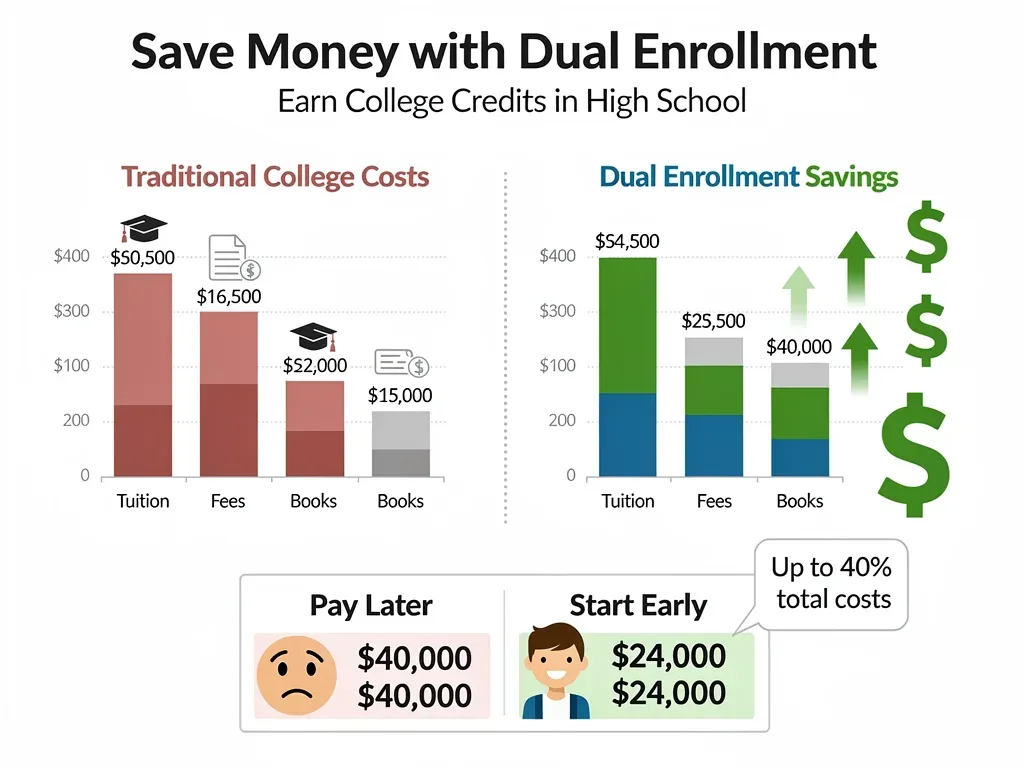
Financially, dual enrollment can lead to substantial savings on tuition costs, as many programs offer reduced rates or are fully funded by school districts. This makes higher education more accessible and less burdensome for families facing rising college expenses.
Academically, students gain exposure to college-level rigor, improving their readiness for university coursework and enhancing their college applications. The experience of managing college schedules and expectations also fosters independence and self-discipline.
Academic Preparedness and Rigor
Dual enrollment courses often mirror the intensity and expectations of college classes, providing students with a realistic preview of university academics. This exposure helps students adapt to higher education demands, including critical thinking, research, and independent study.
The curriculum in these programs is designed to be challenging, pushing students to develop stronger analytical and problem-solving skills. Such experiences are invaluable for building a robust academic foundation that supports future success in specialized fields.
Exposure to college-level coursework
Development of critical thinking skills
Enhanced research and writing abilities
Improved time management and study habits
Financial Advantages and Savings
One of the most compelling reasons to pursue dual enrollment college credits is the potential for significant financial savings. By earning credits at a reduced cost or even free, students and their families can avoid thousands of dollars in future tuition fees.
Many states and local school districts subsidize dual enrollment programs, making them an attractive and affordable option for families. This financial relief can alleviate the burden of student loans and make higher education more attainable for a wider range of students.
Anúncios
Reduced college tuition costs
Potential for free college credits
Lower overall student debt
Increased access to higher education
Choosing the Right Dual Enrollment Path
Selecting the appropriate dual enrollment program requires careful consideration of various factors, including academic interests, career goals, and college transfer policies. Students should research programs offered by local community colleges and universities.
It is crucial to ensure that the college credits earned through dual enrollment will transfer to their intended four-year institution. Students should consult with high school counselors and college admissions offices to confirm credit articulation agreements.
The best dual enrollment programs align with a student's academic strengths and future aspirations, providing courses that are both challenging and relevant. A well-chosen path can significantly streamline the journey towards a bachelor's degree.
Accreditation and Transferability
Accreditation is a critical factor when evaluating dual enrollment programs, as it ensures the quality and recognition of the credits earned. Students must verify that the college offering the courses is regionally accredited, which is essential for credit transfer.
Understanding the transfer policies of prospective four-year universities is equally important. Some institutions have specific rules regarding which dual enrollment credits they accept, while others may have limits on the total number of transfer credits.
Students should proactively engage with college admissions advisors to confirm that their dual enrollment college credits will be accepted. This proactive approach can prevent future disappointments and ensure a seamless transition.
Program Options and Course Selection
Dual enrollment programs vary widely, ranging from general education courses to specialized vocational training. Students have the opportunity to select courses that complement their high school curriculum and align with their academic interests.
Course selection should be strategic, focusing on subjects that are foundational for their chosen major or fulfill general education requirements. Popular choices include English composition, mathematics, history, and introductory science courses.
High school counselors play a vital role in guiding students through the course selection process, helping them make informed decisions that support their long-term educational and career objectives. This guidance is key to maximizing the benefits of dual enrollment.
Challenges and Considerations
While dual enrollment offers many advantages, students may encounter challenges that require careful navigation. The increased academic workload and the need for strong organizational skills are common hurdles.
Balancing high school responsibilities, extracurricular activities, and college-level coursework can be demanding. Students must develop effective time management strategies to succeed in both environments.
Another consideration is the potential impact on high school GPA and class rank, as some dual enrollment grades might not be factored into these calculations. Students should clarify these policies with their high school administration.
Managing Academic Rigor and Time
The academic rigor of college courses can be a significant adjustment for high school students, requiring a higher level of independent study and critical thinking. Students must be prepared to dedicate more time to coursework than they might be accustomed to.
Effective time management is paramount for students balancing dual enrollment with their high school commitments. Creating a structured schedule and prioritizing tasks can help prevent burnout and ensure academic success.

Seeking support from instructors, counselors, and peers is essential for overcoming academic challenges. Utilizing college resources, such as tutoring services, can also contribute to a positive learning experience with dual enrollment college credits.
Social and Developmental Aspects
Participating in dual enrollment can sometimes mean a different social experience compared to traditional high school. Students might spend less time with their high school peers, impacting their social development.
However, it also offers opportunities to interact with a more diverse group of college students and faculty, broadening their perspectives and social networks. This exposure can foster maturity and independence.
Finding a balance between academic pursuits and social engagement is crucial for overall well-being. High schools often provide resources to help dual enrollment students maintain connections and participate in extracurricular activities.
Maximizing Your 30 College Credits
To effectively earn 30 college credits before high school graduation, strategic planning and consistent effort are essential. Students should start planning early, ideally during their freshman or sophomore year of high school.
This involves identifying suitable courses, understanding program requirements, and maintaining strong academic performance. Consistent communication with high school counselors and college advisors is key to staying on track.
Leveraging resources such as academic advising, tutoring, and college readiness workshops can significantly enhance a student's success in accumulating dual enrollment college credits. Each course taken is a step closer to their college goals.
Strategic Course Selection and Planning
Strategic course selection involves choosing classes that not only fulfill dual enrollment requirements but also align with future college majors and career paths. This foresight ensures that every credit earned contributes meaningfully to their educational journey.
Developing a multi-year academic plan that integrates both high school and college courses is highly recommended. This plan should outline the sequence of courses, potential challenges, and necessary support systems.
Regularly reviewing and adjusting the plan with advisors helps adapt to changing academic interests or college requirements, ensuring that the dual enrollment college credits remain relevant and beneficial.
Support Systems and Resources
Accessing robust support systems is crucial for students navigating the complexities of dual enrollment. High school counselors, college academic advisors, and mentors can provide invaluable guidance and encouragement.
Many colleges offer resources specifically for dual enrollment students, including orientation programs, academic workshops, and access to campus facilities. These resources help students feel integrated into the college environment.
Family support also plays a significant role in student success, providing emotional encouragement and practical assistance. A collaborative approach involving students, parents, and educators creates a strong foundation for achieving the goal of 30 college credits.
Future Outlook for Dual Enrollment
The landscape of dual enrollment continues to evolve, with increasing recognition of its value by educational institutions and policymakers. The trend towards early college experiences is expected to grow, offering more opportunities for high school students.
Legislative efforts are often underway to expand access to dual enrollment programs, making them more widely available and affordable across different states and communities. This expansion aims to democratize access to higher education.
As more students successfully earn dual enrollment college credits, institutions are refining their articulation agreements and support services to better accommodate this growing demographic. The future looks promising for this academic pathway.
Expanding Access and Opportunities
Efforts to expand dual enrollment access are focusing on underserved populations and rural areas, ensuring that all students, regardless of their socioeconomic background, have the chance to earn college credits early. This promotes educational equity.
Increased funding and partnerships between high schools and colleges are driving the creation of new programs and the enhancement of existing ones. These collaborations are vital for building a robust pipeline to higher education.
The goal is to create a seamless educational continuum, where students can transition from high school to college with a significant academic advantage, reducing barriers to degree completion.
Impact on College Readiness and Success
Dual enrollment programs have a proven impact on college readiness, as students develop the academic skills and confidence needed to thrive in a university setting. This early exposure reduces the shock of transitioning to college.
Studies consistently show that students who participate in dual enrollment have higher college retention rates and are more likely to complete their degrees on time. The experience fosters a stronger sense of academic identity and purpose.
The accumulation of dual enrollment college credits provides not just an academic head start, but also a psychological advantage, making the college journey feel more manageable and achievable for many students.
Key Point | Brief Description |
|---|---|
Early College Credits | High school students earn 30 college credits before graduation. |
Financial Savings | Significant reduction in overall college tuition costs. |
Academic Readiness | Prepares students for college-level rigor and expectations. |
Credit Transferability | Ensuring earned credits are accepted by target universities. |
Frequently Asked Questions About Dual Enrollment
What exactly is dual enrollment?▼
Dual enrollment allows high school students to take college courses and simultaneously earn both high school and college credit. These programs are offered by colleges and universities, often in partnership with local high schools, providing an early taste of higher education.
How many college credits can I earn?▼
Many students successfully earn 30 or more college credits through dual enrollment before graduating high school. This can significantly reduce the time and cost required to complete a bachelor's degree, often allowing students to enter college as sophomores.
Will these credits transfer to any college?▼
Credit transferability varies by institution. It's crucial to confirm with your prospective colleges whether they accept dual enrollment credits. Most regionally accredited institutions accept these credits, especially for general education requirements, but policies differ.
What are the main benefits of dual enrollment?▼
The primary benefits include significant tuition savings, early exposure to college-level academics, improved college readiness, and a head start on your degree. It helps students develop strong study habits and explore potential majors before committing to a four-year institution.
Are there any downsides to dual enrollment?▼
Potential challenges include increased academic workload, balancing high school and college schedules, and the possibility of some credits not transferring to specific universities. Students need strong time management skills and clear communication with advisors to navigate these aspects effectively.
Impact and Implications
The growing prominence of dual enrollment college credits signifies a transformative shift in educational pathways, offering high school students an me-unparalleled opportunity to accelerate their academic and professional journeys.
This trend highlights a broader movement towards more flexible and efficient routes to higher education, directly addressing concerns about college affordability and readiness.
As more states and institutions invest in expanding these programs, the landscape of post-secondary preparation will continue to evolve, making early college experiences a standard rather than an exception.
To evaluate course choices, credit transfer policies, and strategic workload management, review Sophia Learning's guide on navigating college classes in high school. The long-term implications point to a more streamlined and accessible higher education system.
Stakeholders should continue to monitor policy changes, funding initiatives, and the development of new partnerships that further enhance the reach and effectiveness of dual enrollment college credits. This strategic educational approach is poised to shape the future of student success.